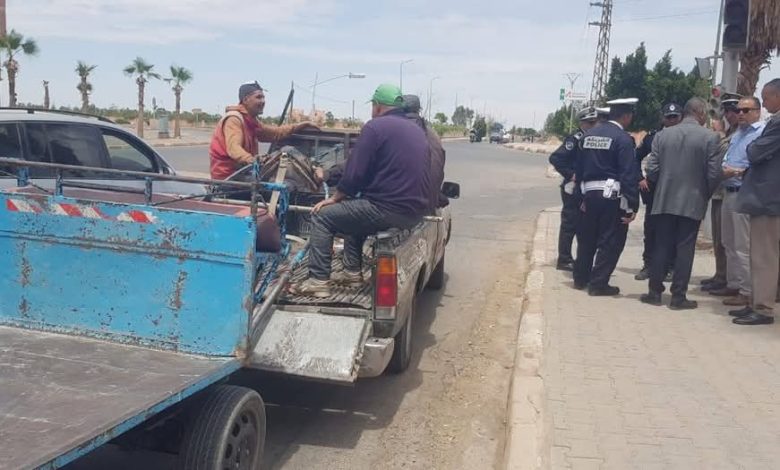
In a move that reflects a serious desire to reshape the urban landscape, the authorities of Kalaat Sraghna, in close coordination between security services and the local community, launched a field campaign directly aimed at putting an end to the proliferation of trailed vehicles, which have become an aesthetic and organizational challenge to the city. This initiative, whose first chapters were embodied yesterday morning, reflected a determination to impose order and rid the streets of the manifestations of chaos that have long burdened citizens’ daily activities and marred the city’s splendor.
The campaign, led by prominent local and security officials, resulted in the removal of several vehicles on its first day that were obstructing traffic flow and spoiling the overall landscape, especially in vital areas and markets that witness a high population density and active commercial activity.
To emphasize the seriousness of the effort, the campaign organizers announced that these carts will be destroyed in accordance with applicable legal frameworks, a move aimed at blocking any attempts to bring this phenomenon back to the forefront.
This bold step comes within the context of a broader vision adopted by local authorities to liberate public property and enhance the city’s attractiveness, which will positively impact the quality of life for residents. Official sources confirmed that this campaign is not merely a temporary measure, but rather the beginning of a series of interventions that will continue in the coming weeks, within the framework of an integrated strategy aimed at addressing various aspects of chaos in public spaces.
Although this initiative was welcomed by a broad segment of the population, who see it as an urgent necessity to restore order and aesthetics to their city, it also raised legitimate questions about the fate of the owners of these carts, who rely on them for their daily livelihood. Some expressed hope that this campaign would be accompanied by a serious focus on finding alternative solutions that guarantee them a decent living, embodying a comprehensive approach that takes into account both organizational and social aspects.